2026-08-27 ·
2026 Refrigerant Changes Explained: What Lake Charles Homeowners Should Know Before Replacing an AC
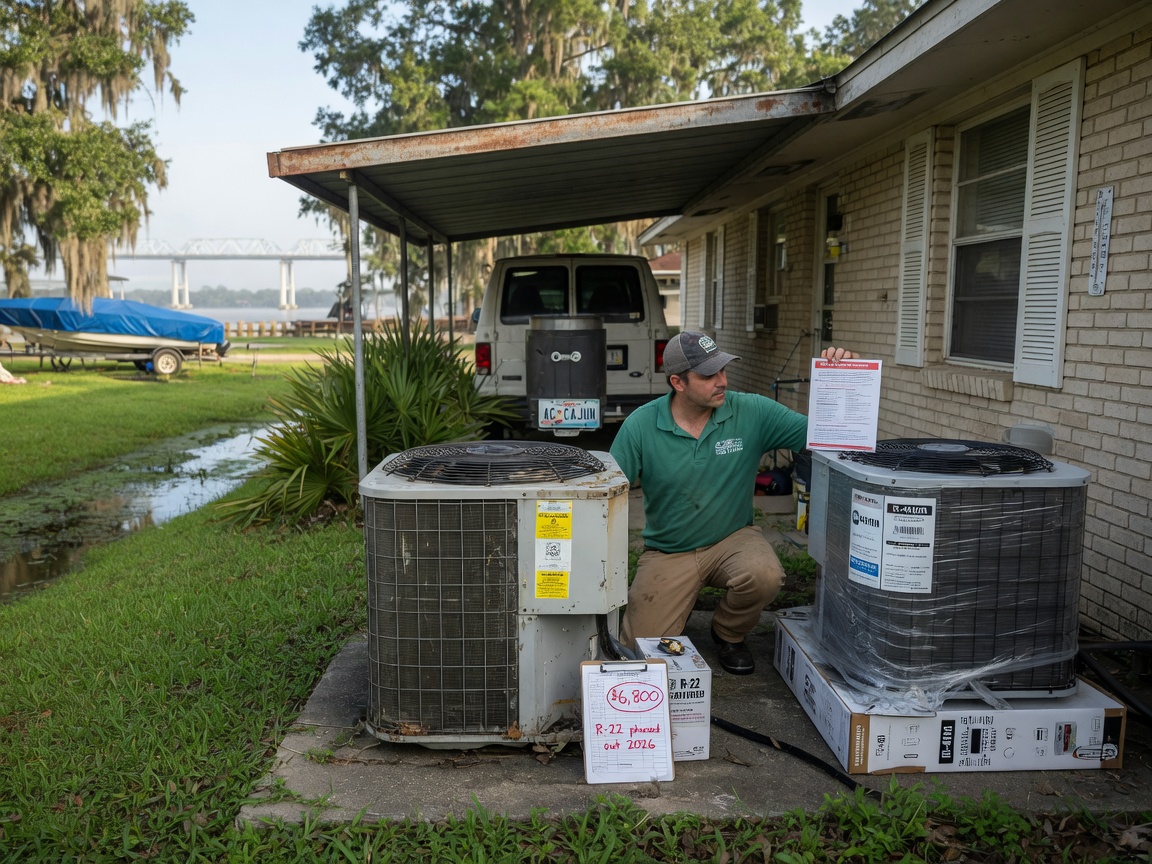
The 2026 EPA rules phase down R-410A production, so Lake Charles homeowners replacing an AC should expect new units to use R-454B or similar A2L refrigerants that meet the lower global warming potential limits. These changes apply to new equipment manufactured after the cutoff and will affect availability, installation practices, and long-term service in Calcasieu Parish. Homes in neighborhoods such as Prien Lake and University Place already run systems hard through extended hot, humid summers, making timing and compatibility important before any replacement.
Why the Refrigerant Shift Hits Lake Charles Homes Hard
Lake Charles sits in a humid subtropical zone where summer dew points stay high for months, forcing AC systems to run longer cycles than in drier regions. The move to A2L refrigerants requires technicians to follow updated handling rules for mildly flammable blends, which changes leak detection and recovery steps on every job. Older housing stock around Downtown Lake Charles and the Charpentier Historic District often has ductwork sized for R-410A equipment, so replacements must account for potential airflow adjustments to keep humidity control steady. Hurricane exposure adds another layer: outdoor coils in Moss Bluff and Prien Lake Park areas face salt air and wind-driven rain that can accelerate corrosion on new units built with different coil materials.
What Homeowners Need to Check Before Scheduling Replacement
Confirm the age and condition of the existing air handler and duct system, because many pre-2010 homes in Calcasieu Parish still use R-22 or early R-410A setups that may need full replacement rather than a simple condenser swap. Measure current SEER ratings against the new minimums that accompany the refrigerant change, since efficiency gains can offset part of the upgrade cost in high-use months. Review electrical service capacity at the disconnect, as some A2L units require updated breakers or wiring in older Oak Park and Goosport properties. Homeowners near McNeese State University or the Lake Charles Civic Center should also verify that any new outdoor unit pad meets local wind-load requirements updated after recent storms.
How Installation Practices Change with New Refrigerants
Technicians must use A2L-rated recovery machines and leak detectors rated for the new blends, which adds steps during every evacuation and charging process. Piping runs in two-story homes common in Margaret Place and Westlake may need slope adjustments to prevent oil return issues with the different refrigerant viscosity. Proper nitrogen purging during brazing becomes non-negotiable to avoid contamination that could void manufacturer coverage on the new equipment. These details matter more in Calcasieu Parish because high humidity amplifies any moisture left in the system after installation.
Planning Timeline and Next Steps for Local Replacements
Schedule evaluations now rather than waiting until 2026 stock shortages appear, especially for homes in Sulphur and Moss Bluff that face the same coastal humidity loads as central Lake Charles. Pair the refrigerant discussion with a full duct inspection to avoid discovering undersized returns only after the new unit arrives. Review the linked maintenance schedule to keep the current system running reliably until replacement, and consult the hurricane protection guide for outdoor unit anchoring details that remain relevant with the new equipment. AC Installation work in this climate benefits from early planning around both the refrigerant rules and seasonal storm windows.
Long-Term Service Realities After the Changeover
Future service calls in Lake Charles will require stocked A2L refrigerant and updated recovery cylinders, so choosing a company already working with the new blends reduces downtime during peak summer months. Systems installed with the updated refrigerants should deliver similar cooling capacity in the heavy latent load conditions typical of Prien Lake and University Place, provided the indoor coil matches the outdoor section. Homeowners who delay replacement until R-410A becomes scarce may face higher emergency pricing when parts availability tightens. Keeping records of the current system’s refrigerant type helps technicians plan the correct recovery and disposal process when the time comes.