2026-08-27 ·
Beating the Louisiana Heat: The AC Maintenance Schedule Every Lake Charles Home Needs
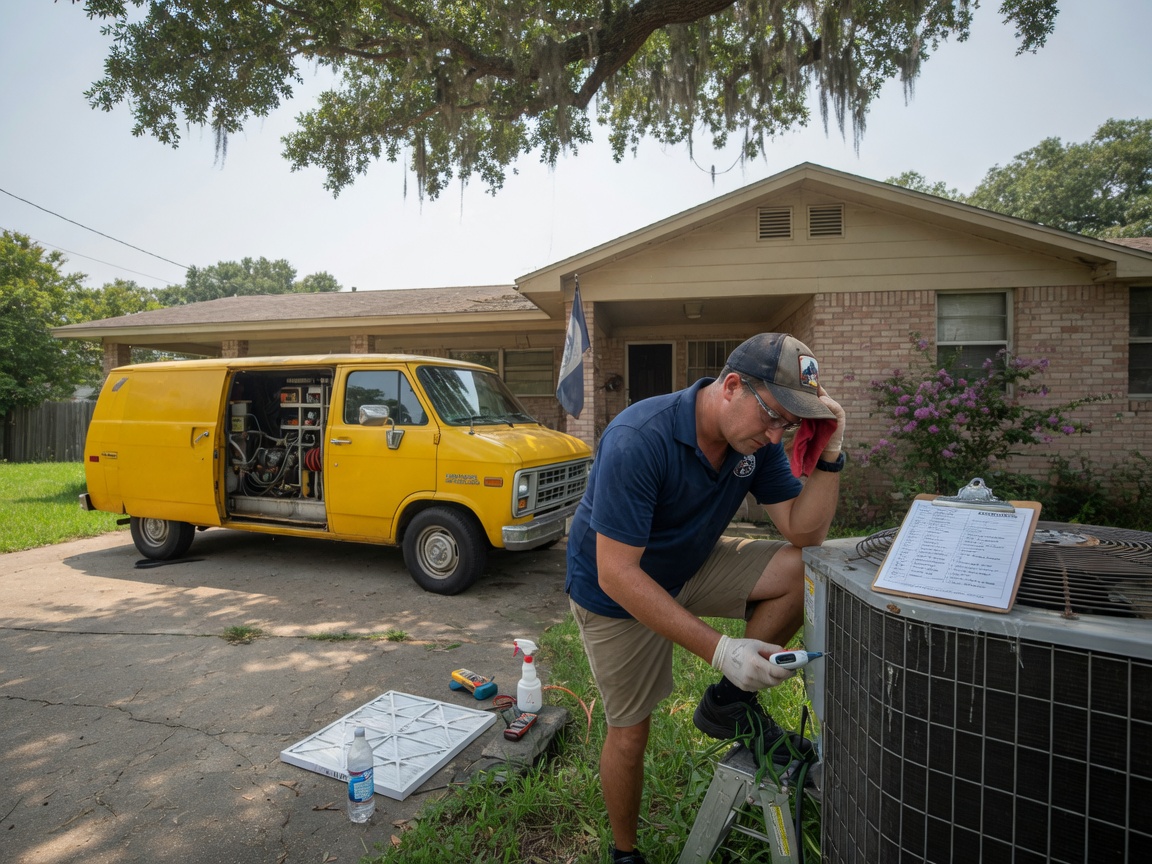
Lake Charles homes need AC maintenance that begins with a full professional tune-up by early March, followed by filter changes every 30 days from May through September, and a post-storm inspection within 48 hours after any hurricane or tropical storm passes through Calcasieu Parish.
Early Spring Tune-Up Before Heat Arrives
In Lake Charles the first real maintenance step happens in March once daytime highs climb past 75 degrees. A technician checks refrigerant levels, cleans the evaporator and condenser coils, and inspects the condensate drain that often clogs from the constant humidity in Calcasieu Parish. Homes in University Place and Downtown Lake Charles frequently have older ductwork that leaks cooled air into attics, so the visit includes a static pressure test. Skipping this step means the system works harder once June humidity arrives and indoor temperatures climb quickly. Residents near McNeese State University or Prien Lake Park see similar patterns because the same moist air off the lake reaches every neighborhood. This single visit prevents most no-cooling calls that spike in late May.
Summer Filter and Drain Routine
From May through September, change or clean the return-air filter every 30 days because pollen, dust, and moisture combine to restrict airflow faster than in drier climates. In Moss Bluff and Prien Lake homes with large live oaks, debris falls onto outdoor units and reduces efficiency within weeks. Homeowners can rinse the condenser fins with a garden hose on a mild day, but avoid high-pressure washers that bend the aluminum. Watch the condensate line under sinks or in attics; standing water breeds algae that blocks drainage and leads to ceiling stains. If the line is already clogged, a wet-vac or bleach solution usually clears it. These monthly habits keep the system running at full capacity during the longest stretches of 90-plus degree days with high dew points.
Post-Hurricane Unit Inspection
After any named storm, walk around the outdoor unit within two days and look for bent fins, shifted pads, or wiring pulled loose by high winds common along the Calcasieu Parish coast. Hurricane Season and Your AC explains how to secure the unit before the next season. Check that the disconnect box remains dry and that no tree limbs from Prien Lake Park or nearby yards landed on the line set. Even if the AC still runs, bent fins reduce heat transfer and raise energy use for the rest of the summer. A quick call to a local tech catches small issues before they turn into compressor failure during the next heat wave.
When Replacement Makes Sense
Systems in Lake Charles homes typically reach the end of reliable service between 10 and 15 years because of constant humidity and salt air exposure. When repair costs approach half the price of a new unit, or when the system uses R-22 that will be phased out, replacement becomes the practical choice. 2026 Refrigerant Changes Explained outlines the upcoming shift and what it means for older equipment. Homes in the Charpentier Historic District often need duct modifications during replacement, while newer builds in Moss Bluff may accept a high-efficiency model that handles humidity better. A clean, well-maintained system from the schedule above simply lasts longer before that decision arrives.
Fall Shutdown and Winter Checks
Once October cools off, schedule a second professional visit to verify the heat strips or heat pump function and to clear leaves from the outdoor cabinet before winter rains. In Goosport and Oak Park, where many homes sit on slabs, check that the condensate pan still drains properly so standing water does not freeze and crack components. Run the system on fan-only for 15 minutes monthly during mild periods to keep the blower motor lubricated. These steps prevent surprise failures when the first cold snap hits and residents switch to auxiliary heat. The same technician can also clean the ducts if indoor air quality has declined after summer humidity and pollen.